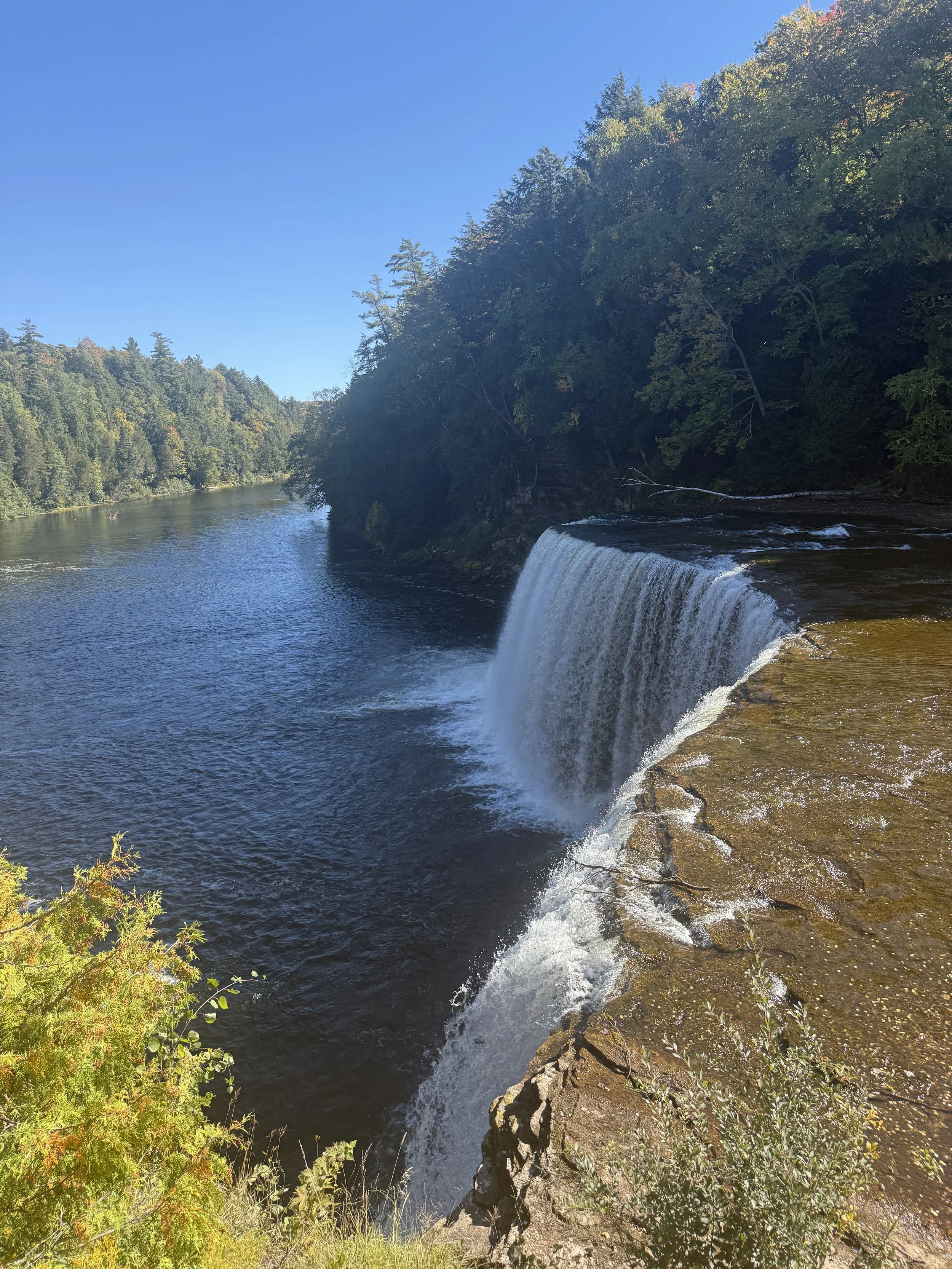
Some trips are about the places we see. Others are about the people waiting for us when we arrive. This now began in Green Bay, where we spent time with family and attended a Packers game before choosing the long, beautiful route home through Michigan’s Upper Peninsula.
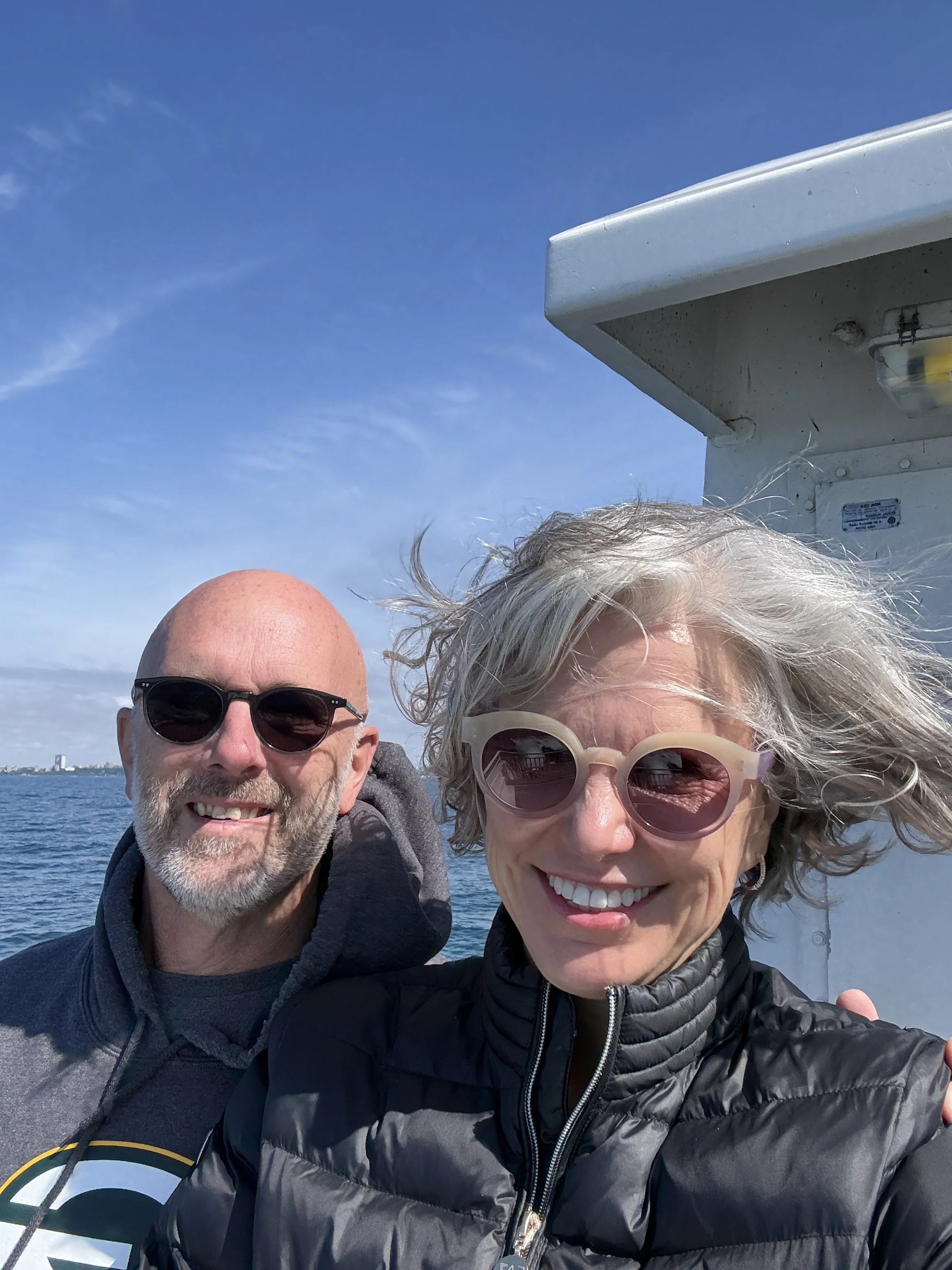
Sometimes the best part of a trip is the part you almost didn’t take. We began ours on the Lake Express ferry from Muskegon to Wisconsin. It was a beautiful day — bright blue sky, open water, sunshine, and that wonderful feeling that comes when you are officially away from home and the trip has begun. Doug and I stood outside on the ferry with Lake Michigan stretching behind us, happy simply to be going somewhere together. Our first destination was Green Bay. And, if I am being fair, we arrived with very high hopes.
Green Bay: The Part That Hurt
There is nothing quite like Lambeau Field on game day. The energy around the stadium, the fans, the history, the lights — it is one of those places that makes even an ordinary game feel important.
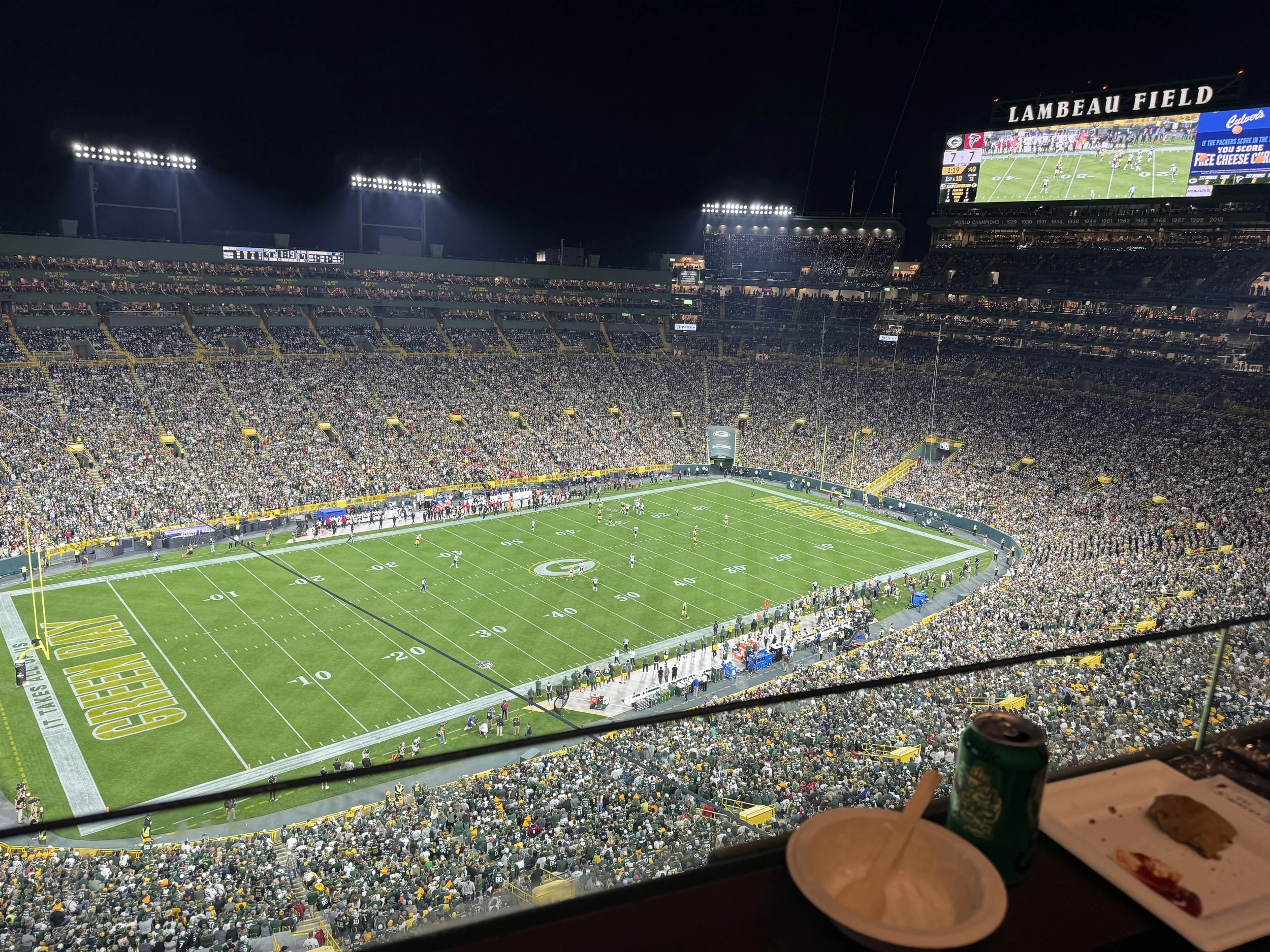
Under the Lights at Lambeau Field
The atmosphere was unforgettable. The outcome was another story.
This one felt especially personal. We were there with family, surrounded by people who love the Packers, and I wanted the night to be one of those perfect football memories. It wasn’t.
The Packers lost badly. And it was heartbreaking. There is no elegant way to dress that up. It was painful to watch, and by the end of the night the stadium felt very different than it had when we walked in. That is part of sports, of course. You do not get to choose which memories become the joyful ones.
But even in the disappointment, I was grateful to be there. I was grateful for family, for the experience, and maybe without knowing it yet, I was ready for the quieter part of the trip that came next.
Choosing the Longer Route
Instead of taking the fastest way home, we headed north into Michigan’s Upper Peninsula. There is something about the U.P. that changes your pace almost immediately. The roads stretch out.
The towns grow smaller.
The trees seem to move closer.
And suddenly there is less to do — which, I realized, may have been exactly what I needed.
We stopped at places we had planned before the trip, but experiencing them was different from simply seeing their names on an itinerary.
There were old buildings and quiet harbors.
Clear water that looked almost unreal.
Forests beginning to turn.
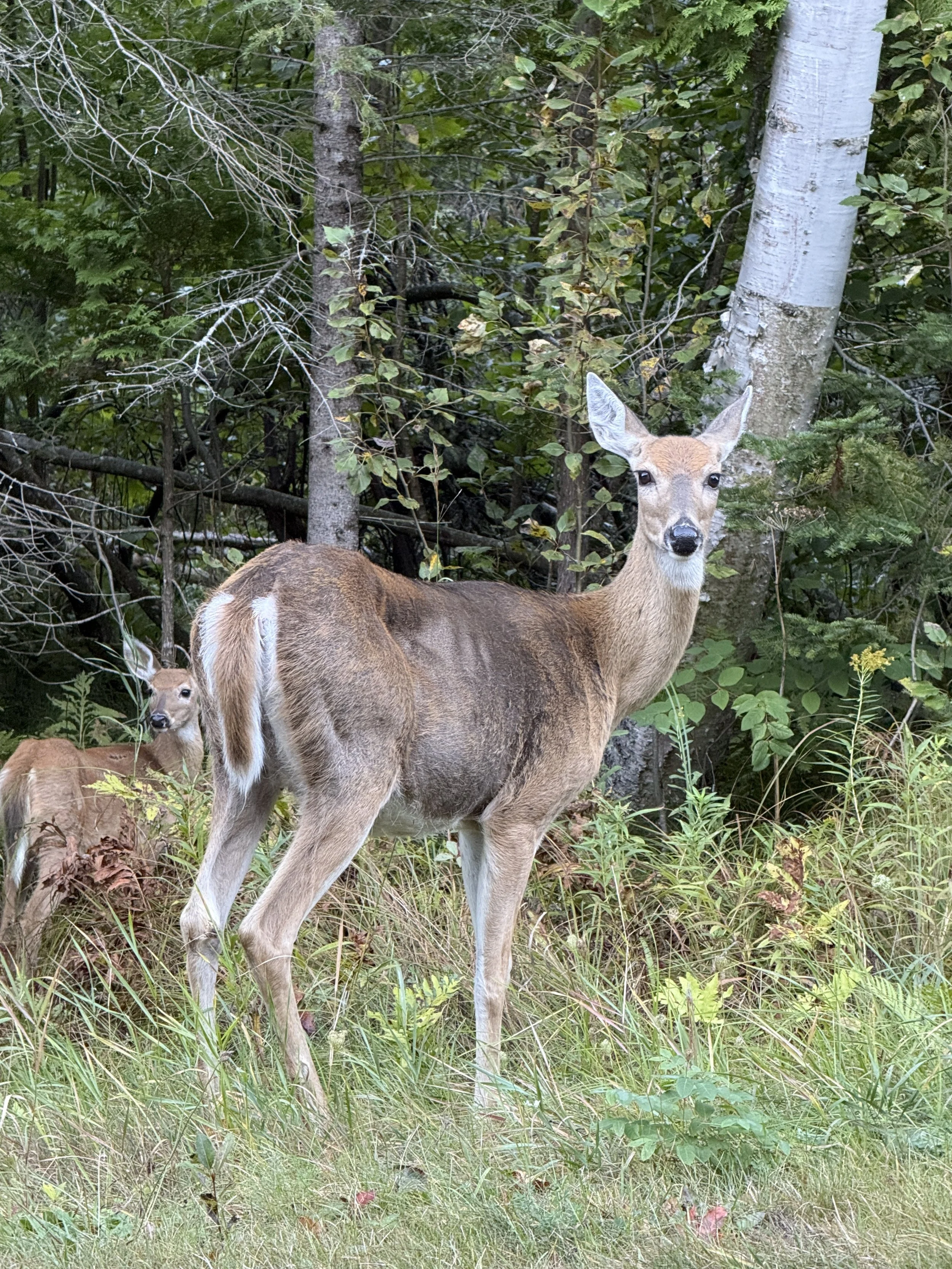
Deer at the edge of the road.
And that feeling, over and over again, that Michigan still has the ability to surprise me.
A Place That Time Forgot
One of my favorite stops was Fayette Historic State Park.
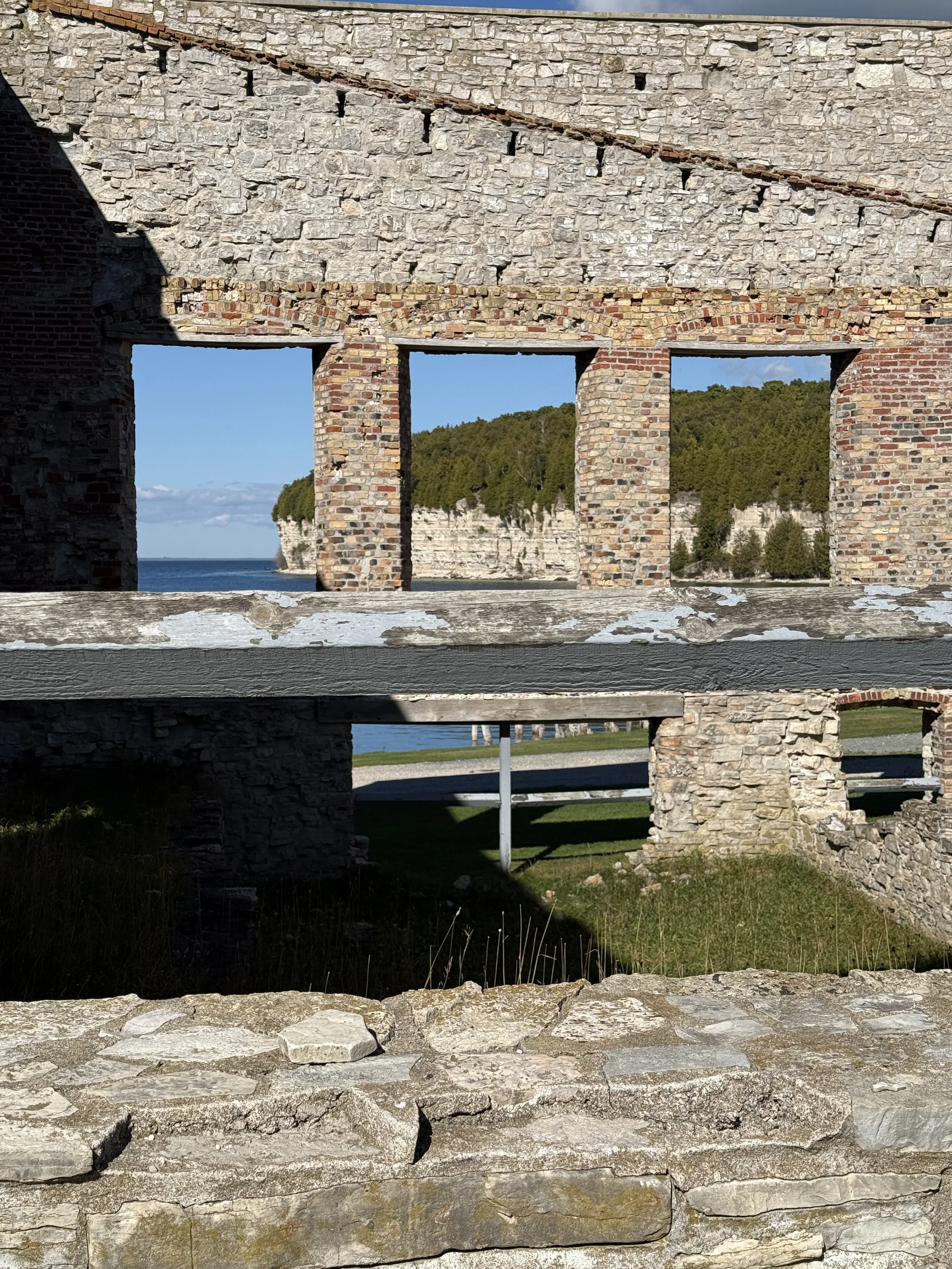
Fayette Historic State Park, Michigan’s Upper Peninsula where the remains of a once bustling industrial town stand quietly along the water.
There is something haunting and beautiful about walking through an abandoned nineteenth-century industrial town.
The buildings remain, weathered and quiet, along the water.
You can imagine the people who once lived there — working, raising families, building lives that probably felt as immediate and permanent to them as ours do to us.
And then, eventually, the work stopped.
People left.
Nature moved back in.
Places like that remind me how temporary so much of life is.
Not in a sad way.
In a clarifying one.
We spend so much time hurrying through our days as if everything we are doing is urgent.
Standing among those old buildings, very little felt urgent.
Water Everywhere
The Upper Peninsula is defined by water.
Sometimes it appeared suddenly through the trees.
Sometimes it stretched so far that it looked like the ocean.
We stood above impossibly clear springs, watched waterfalls rush over dark rock, and took a boat out along the cliffs of Pictured Rocks.
That cruise was one of my favorite parts of the trip.
The water was calm and blue, the cliffs rising beside us in layers of stone and color.
From the boat, the scale of the shoreline changes completely.
What looks beautiful from land becomes dramatic from the water.
There were arches carved by time, mineral-streaked cliffs, forests growing impossibly close to the edge, and places that looked almost untouched.
For a while, there was nothing to do but look.
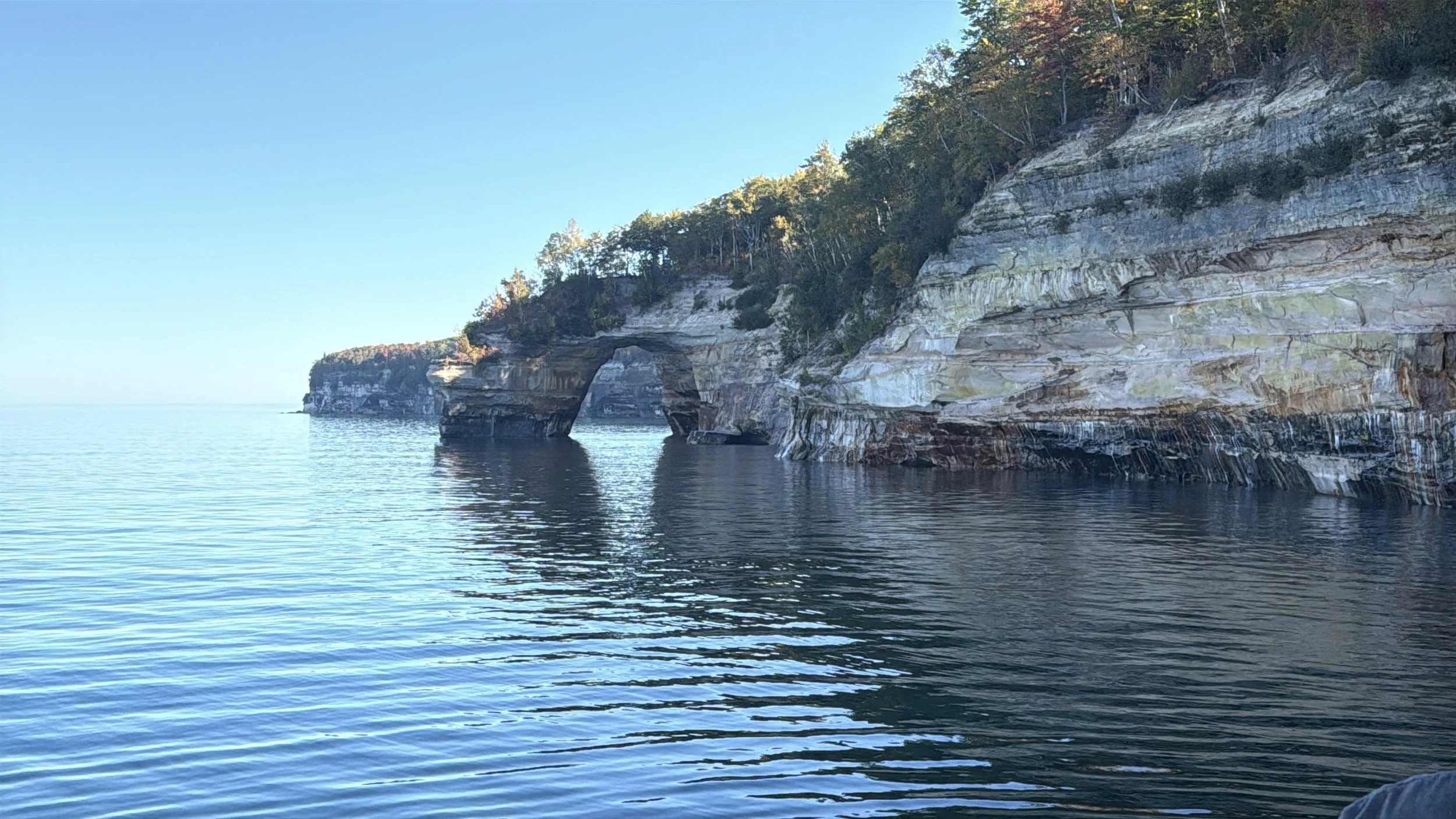
Pictured Rocks National Lakeshore, Michigan’s Upper Peninsula-a view best appreciated from the water.
I loved that.
The Unexpected Places
Some of the best moments were not the ones we had carefully planned.
We ate incredibly well throughout the trip, but one meal still makes us smile.
We stopped at a completely nondescript place that looked more like a neighborhood bar than somewhere you would expect to have a memorable dinner.
And then we had one of the best steaks either of us has ever eaten.
It was such a good reminder not to judge a place too quickly.
The Upper Peninsula gave us several moments like that — places that looked ordinary from the outside and turned out to be wonderful once we stepped inside.
I loved that about the trip.
There was less polish, less predictability, and more surprise.
And somehow that became part of what we were enjoying: not needing everything to be impressive in order for it to be special.
The Gift of the Longer Way
Somewhere along the road north, the trip changed.
Maybe it was the fresh air.
Maybe it was the quiet.
Maybe it was simply having enough time together without the usual demands of work and home pressing in.
Doug and I started talking differently.
We talked about retirement.
We talked about what we want the rest of our lives to look like.
We talked about where we might live when the time comes to downsize, and what kind of place would feel like home in that next season.
We talked about traveling more.
And we kept coming back to the same idea:
working less and living more.
Not because work has no value. It does.
But after years of building careers, raising children, meeting obligations and moving from one responsibility to the next, we are beginning to ask a different question.
What do we want to make room for now?
More time together.
More travel.
More mornings that are not rushed.
More places we have never seen.
More conversations that are not squeezed between everything else.
For a few days, we were not trying to solve the future.
We were simply imagining it together.
And I realized how much I had missed that.
The waterfalls and cliffs and brilliant fall color were beautiful.
But what I will remember most is the feeling that Doug and I were looking in the same direction again.
Sometimes a trip gives you a new place to see.
Sometimes it gives you a clearer picture of the life you still want to live.
The Beauty of Not Being in a Hurry
Maybe the most memorable part of the trip was not a particular destination at all.
It was the space between them.
The brilliant fall color along the road.
A deer and her fawn appearing at the edge of the woods.
Stopping because something looked beautiful instead of because it was on the schedule.
Driving without feeling like we needed to be somewhere immediately.
I realized how rarely I do that.
Most of life is organized around what comes next.
The next meeting.
The next responsibility.
The next project.
The next thing that needs fixing, planning, answering or completing.
But for a few days, the road itself was enough.
Coming Home
Eventually we reached the Mackinac Bridge.
There is something about driving across that bridge that always feels symbolic to me.
You are leaving one part of Michigan and entering another.
Behind you are miles of forest, shoreline, waterfalls, cliffs and small towns.
Ahead is home.
By then, I felt different than I had when we left Green Bay.
Not dramatically different.
Just quieter.
More rested.
More present.
And more connected to Doug.
We had begun the trip crossing Lake Michigan under a bright blue sky, full of anticipation.
We had stood beneath the lights at Lambeau and watched a game that hurt.
Then we had taken the longer route home and found, somewhere in all those miles, a little more space for beauty, conversation, laughter, dreaming and each other.
In between were miles we did not need to travel.
And those miles became the best part.
Maybe that is what the long way home gave us.
Not answers.
But space to ask better questions.
How much do we really want to work?
Where do we want to live?
What do we still want to see?
And how do we make sure the years ahead are not simply filled, but lived?
Sometimes, the long way home is the way we actually come home.
Have you ever taken the long way home and been glad you did? What did you find along the way?